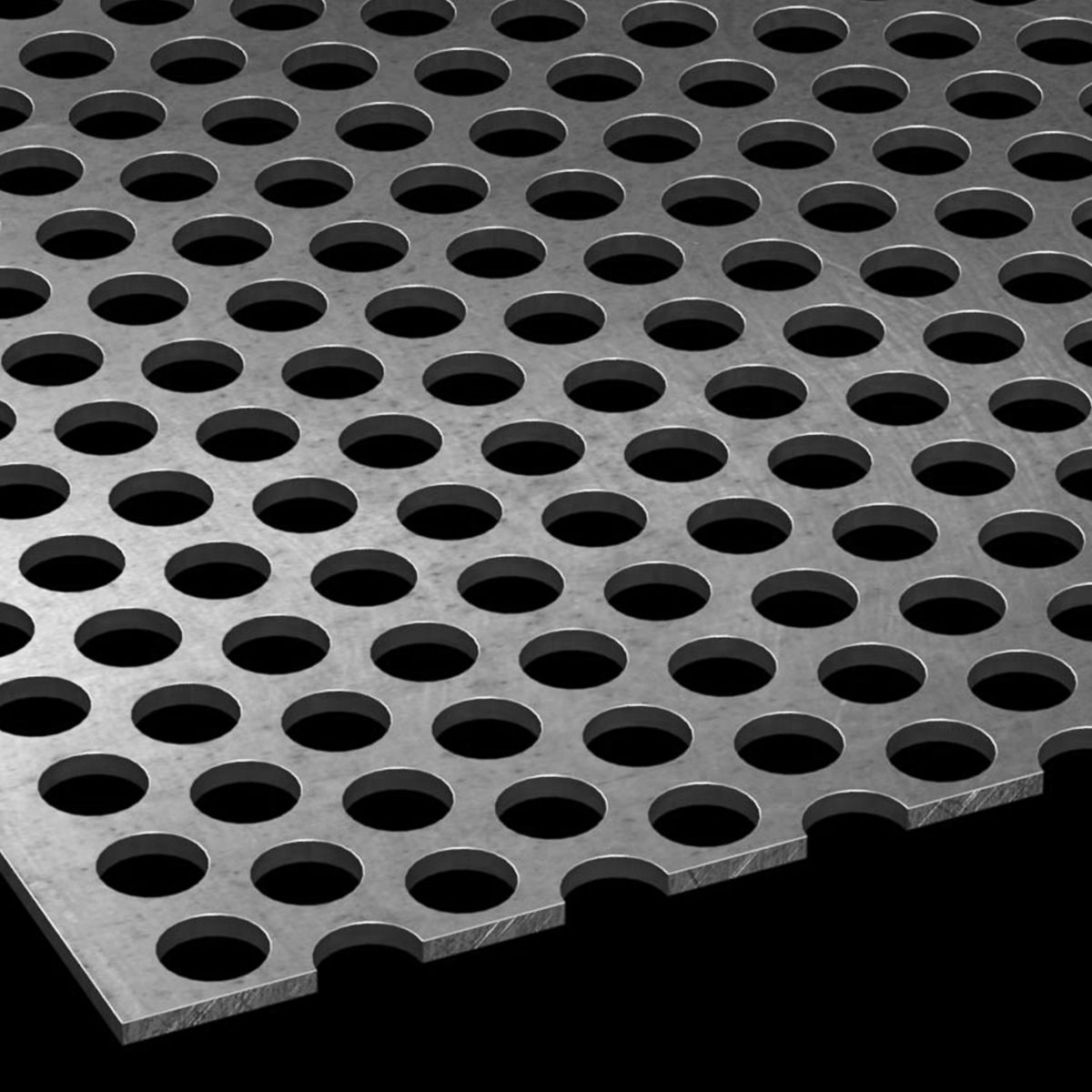
Perforated metal sheet
Sheet thickness: 0.2 – 6.0 mmHole size: 0.5 – 30 mm
One sheet slit and stretched — no weld to fail, no waste at the edge. Raised for grip, flattened for surfaces that have to stay clean. Chinese trade name: 钢板网.
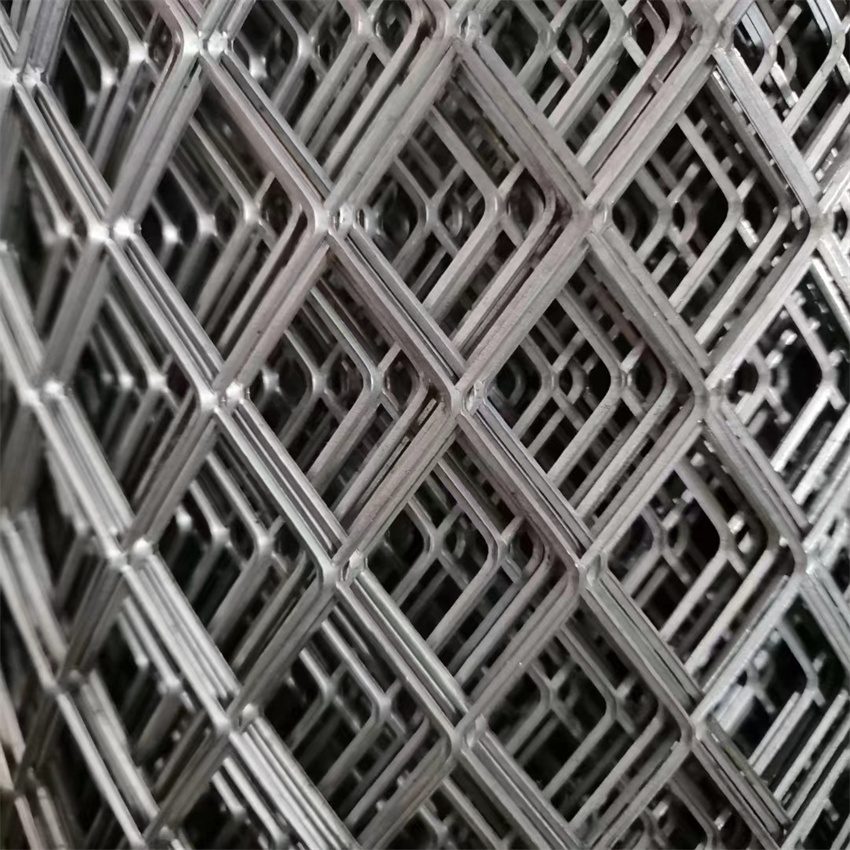
Close-up of raised expanded metal mesh showing the diamond pattern and angled strands.
Standard production range for this line. Anything outside it is a conversation, not a refusal — tell us the application and we will say what the tooling can hold.
A sample panel and a mill certificate come before the container does. Ask for both with the first quotation.
| Base sheet thickness | 0.5 / 0.8 / 1.0 / 1.5 / 2.0 / 3.0 / 4.0 / 5.0 / 6.0 / 8.0 mm |
| Strand width | 1.0 – 12 mm |
| Short way of mesh (SWM) | 5 – 75 mm |
| Long way of mesh (LWM) | 10 – 150 mm |
| Sheet size | 1000 × 2000, 1220 × 2440, 1500 × 3000 mm; custom |
| Standard export size | 4 × 8 ft (1220 × 2440 mm) |
| Material | Mild steel, hot-dip galvanized steel, SS 304 / 316, aluminium, copper |
| Finish | Raised (standard), flattened, galvanized, powder coated |
| Packing | Sheets on edge in fumigated crates, or palletised flat |
Expanded metal starts as a sheet, not a wire. A staggered row of slits is punched into it and the sheet is then stretched: it opens into a diamond lattice in one piece, with no welding, no wire to unravel and no offcuts — the whole sheet becomes product.
The stretch is what gives it strength. The strands sit at an angle to the plane and the material work-hardens as it moves, so a 2 mm expanded sheet carries more than a welded grid of the same weight.
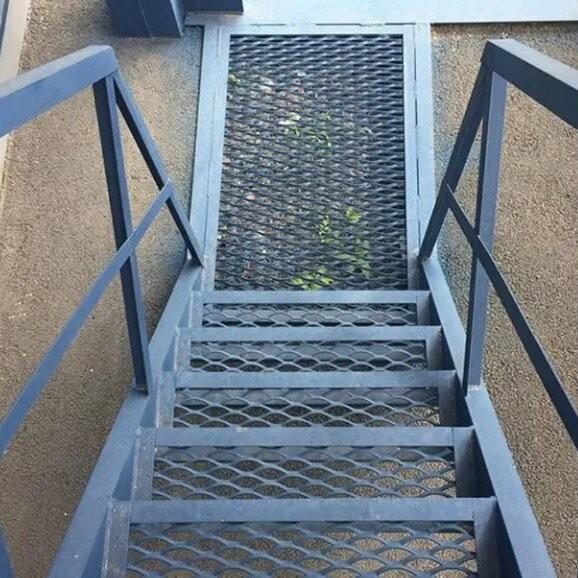
Raised mesh keeps the strands standing out of the plane. That is what gives a walkway its grip, and what most guard and platform specifications assume. Flattened mesh is pressed through rolls after stretching: the strands lie flat, the sheet measures true thickness, and nothing catches a brush, a hose or a hand.
Flattening costs a little more because it is a second operation, and it loses some stiffness. Raised for floors and stairs, flattened for ceilings, filters, cladding and anything that gets wiped down.
Expanded mesh is measured by the short way of mesh (SWM) and the long way (LWM) — the inside dimensions of the diamond, across and along the strand direction. A 25 × 75 mm mesh is not a 25 × 75 mm hole in the way a punched hole is: it is measured inside the diamond, and strand width is quoted separately.
When comparing offers, compare SWM, LWM, strand width and base thickness together. Two sheets sold as "2 mm expanded mesh" can differ by 30 % in weight if the strand width differs.
For walkway and platform work the specification is driven by load and support spacing, not by mesh size — send the span and the load and we quote to it. For machine guards the requirement is usually that a finger or a tool cannot pass through, which puts the limit on the LWM rather than the thickness.
The same product in thin gauge is expanded lath: the base for plaster and render, where the mesh holds the mortar and the key comes from strands standing out of the wall.
Sheets cut cleanly with a plasma cutter or a guillotine; a laser is slower than expected on an open lattice. Hot-dip galvanizing after expansion covers every strand, including the cut edges of each diamond, which is what makes galvanized expanded mesh last outdoors.
Typical applications for this line. If yours is not listed, it usually still fits.
Raised. The standing strands provide the grip, and most walkway specifications assume raised mesh. Flattened is for surfaces that must stay clean and low-profile.
Yes — send the span between supports and the load per square metre and we quote the base thickness and strand width that carries it. Structural calculations are signed by the project engineer.
The quotation states kg per sheet and kg per square metre, calculated from base thickness, strand width and mesh size. That is the number to compare between suppliers.