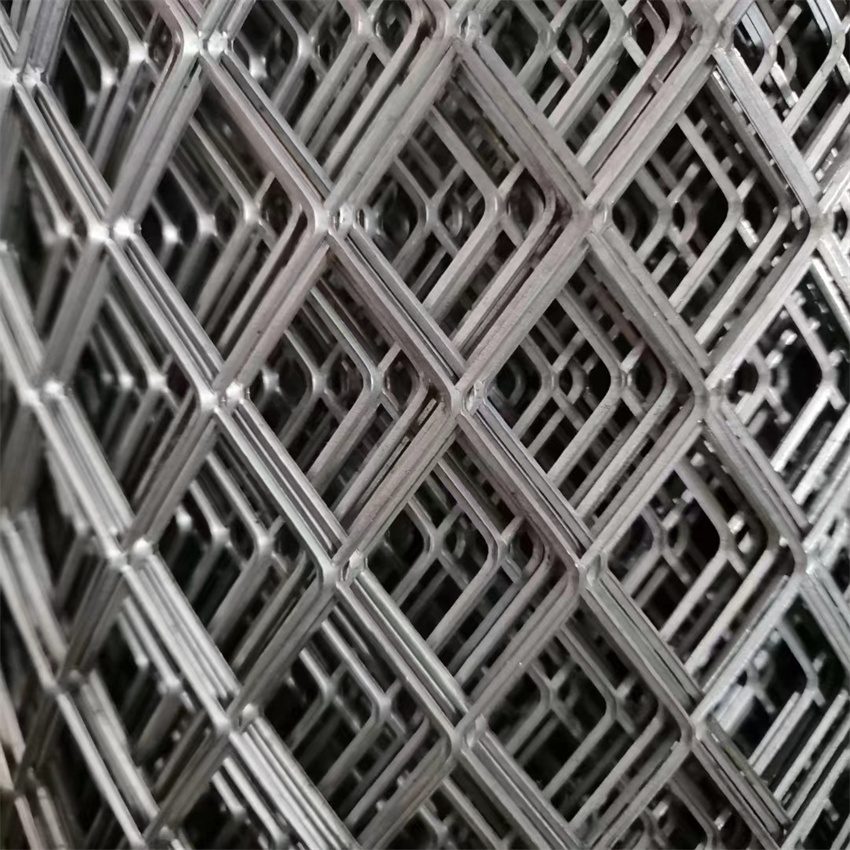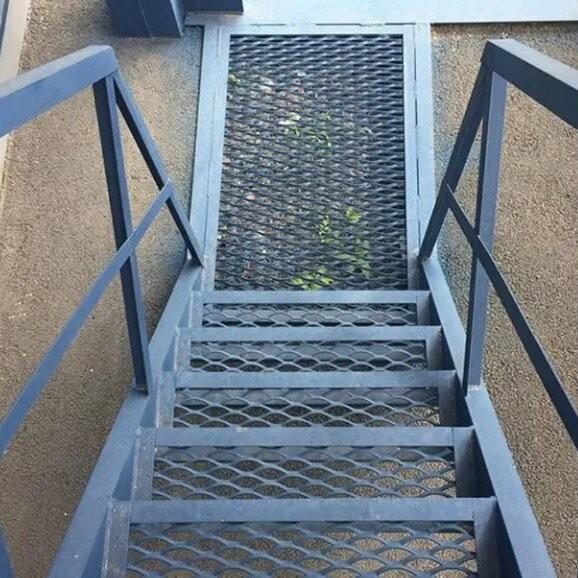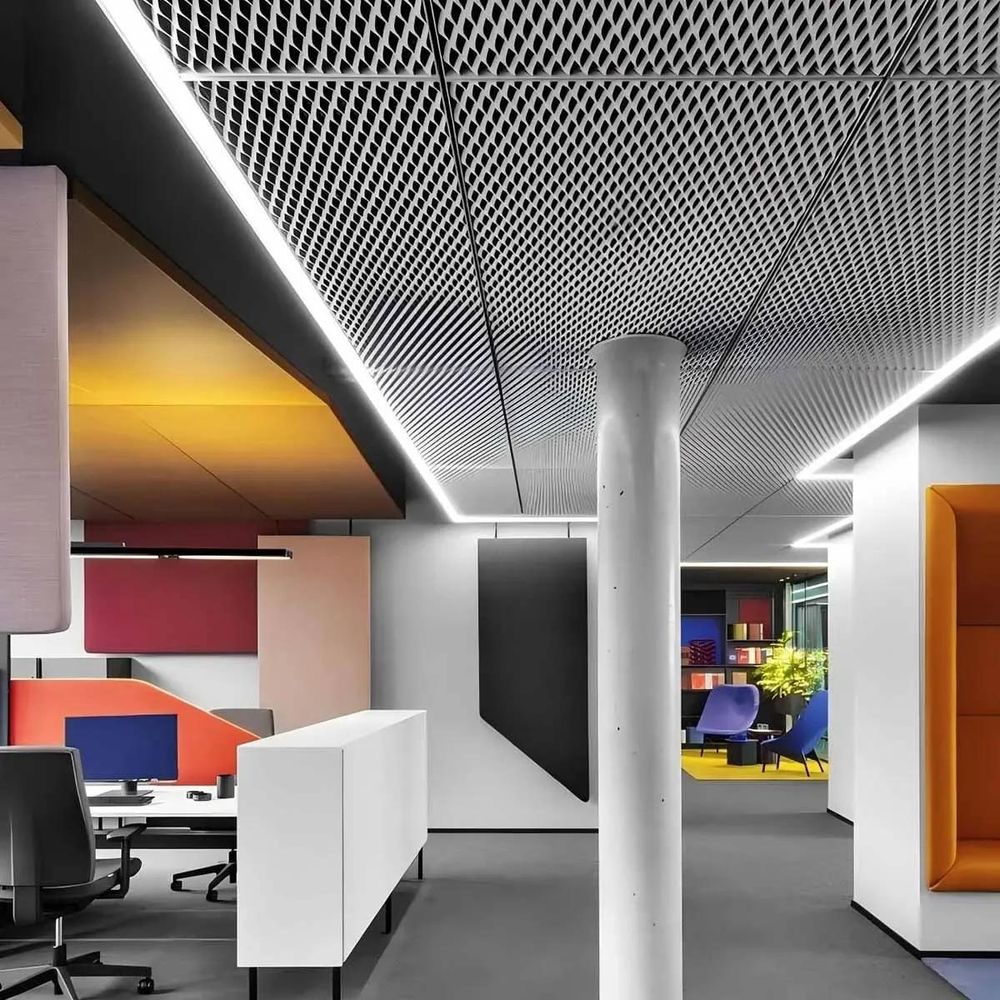
Aluminium expanded mesh
Alloy: AA 1100 / 3003 / 5052Sheet thickness: 0.5 – 3.0 mm
Punched on CNC turret presses from coil and plate, then cut, folded or curved to your drawing. Holes from 0.5 mm up, any pattern that has a die.
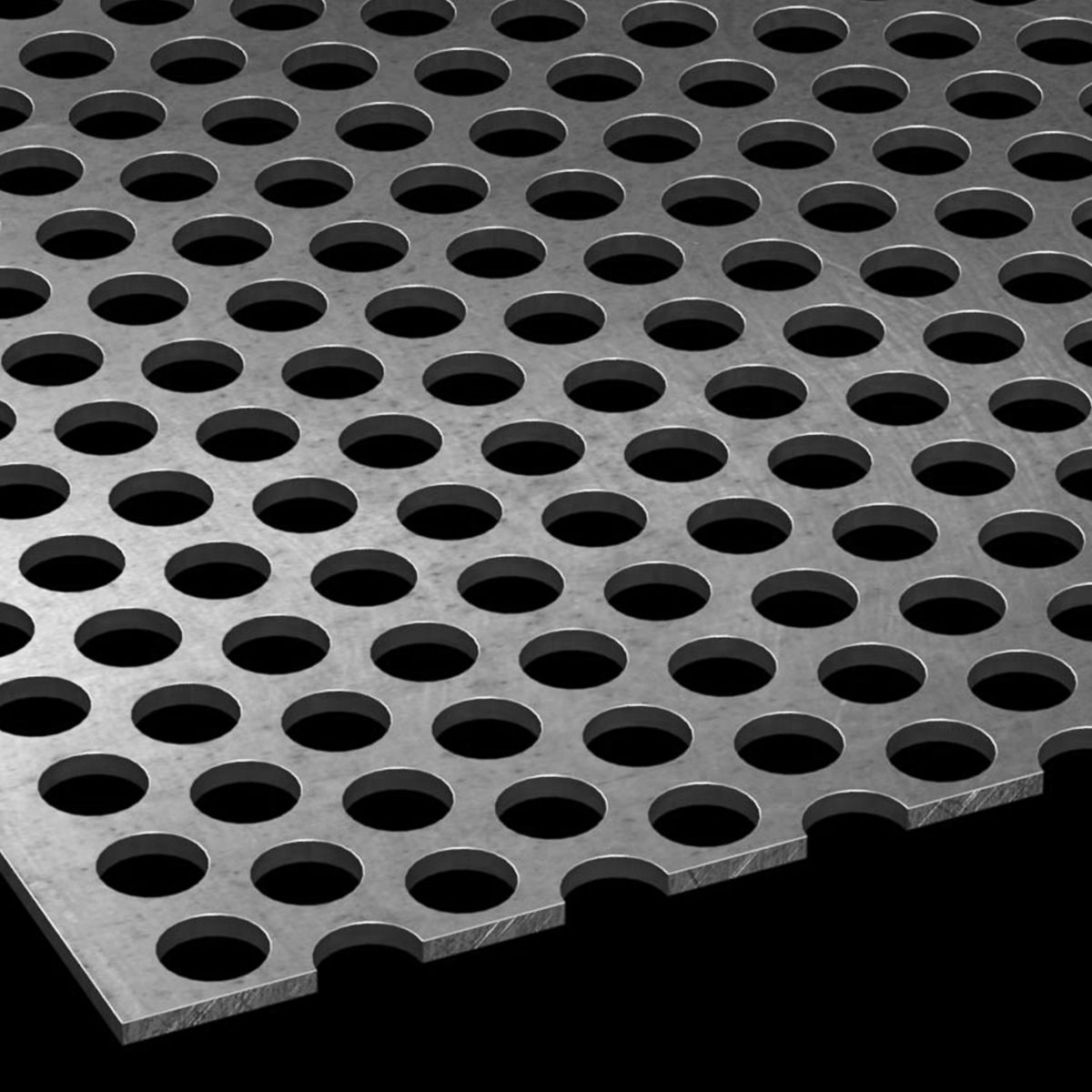
Galvanized perforated metal sheet with a staggered pattern of round holes.
Standard production range for this line. Anything outside it is a conversation, not a refusal — tell us the application and we will say what the tooling can hold.
A sample panel and a mill certificate come before the container does. Ask for both with the first quotation.
| Thickness | 0.2 / 0.5 / 0.8 / 1.0 / 1.5 / 2.0 / 3.0 / 4.0 / 5.0 / 6.0 mm |
| Hole shape | Round, square, slotted, hexagonal, triangular; custom tooling available |
| Hole size | 0.5 – 30 mm (smaller holes on thin gauge, larger on request) |
| Pattern | 60° staggered, 45° staggered, straight row; pitch to drawing |
| Open area | 10 – 70 %, calculated per pattern |
| Sheet size | 1000 × 2000, 1220 × 2440, 1500 × 3000 mm; cut to size |
| Material | Cold-rolled mild steel, hot-dip or pre-galvanized steel, SS 304 / 316, aluminium 1060 / 3003, brass |
| Finish | Galvanized, PVC coated, powder coated to RAL, brushed or mirror polish |
| Tolerance | Hole diameter ±0.1 mm under 3 mm; sheet size ±1 mm; camber under 1 mm/m |
| Further work | Shearing, laser cutting, folding, rolling to radius, welded frames, CNC-cut panels |
Perforated sheet is punched through hardened tooling, hole by hole, in a fixed pattern. Three numbers describe it completely: hole size, pitch (the centre-to-centre distance) and arrangement — straight rows or staggered at 60°.
Those three numbers set the open area, and open area decides almost everything else: how much air or light passes, how much the sheet weighs, how far it deflects under foot, and how much of what sits behind it stays visible. Send hole size and pitch, and we return the open area, the weight per sheet, and a price.
A staggered 60° pattern fits more holes into the same area than a straight grid, so it gives more open area at the same pitch and keeps the sheet stiffer in both directions. Straight rows read as a visible grid, and are used where the look matters as much as the airflow.
Open area follows directly from hole size and pitch. For a 60° pattern it is roughly 0.907 × (hole diameter ÷ pitch)² as a percentage: a 3 mm hole on a 5 mm pitch comes out at about 33 %. We put the calculated figure on the quotation so it can be checked against the drawing.
The hole should not be smaller than the sheet thickness, and in practice wants to be at least the thickness — a 1 mm hole in 2 mm plate needs a punch that breaks almost immediately. Below that ratio, expect laser or chemical etching, and a different price.
Edge margins matter too. Punched holes need a solid band at the edge of the sheet, usually one hole diameter or more, otherwise the edge distorts when the sheet is folded or lifted.
Standard patterns sit on the shelf: 1, 2, 3, 4, 5 and 8 mm round holes in common pitches. Anything else — a logo pattern, an oblong slot, a mixed pattern for a facade — needs a die. That is a one-off cost, and usually seven to twelve days before the first sheet.
Send a DXF, a PDF drawing, or a photograph with the hole size written on it. If you only have the application, tell us the airflow or the weight limit and we will propose a pattern.
Hot-dip galvanizing after punching covers the cut edges and the inside of every hole, which is why it is the right choice for outdoor screens and machine guards. Pre-galvanized sheet is cheaper but leaves bare edges at each hole. Powder coat adds colour and a smoother surface, and holds up better than paint on an exterior.
Typical applications for this line. If yours is not listed, it usually still fits.
Normally no. A punch needs the hole to be at least as large as the thickness to survive; below that, laser cutting or chemical etching is the practical route and the cost per square metre rises sharply.
Round holes at 60° staggered: 0.907 × (hole ÷ pitch)² × 100. Straight rows: 0.785 × (hole ÷ pitch)² × 100. We confirm the figure against the drawing on every quotation.
Seven to twelve days for the die, then normal production. Standard patterns ship in fifteen to twenty days from confirmation.
SS 316 for salt spray, or hot-dip galvanized steel with a powder coat if the budget is tighter. Aluminium works inland but pits near the sea unless it is anodised or PVDF coated.