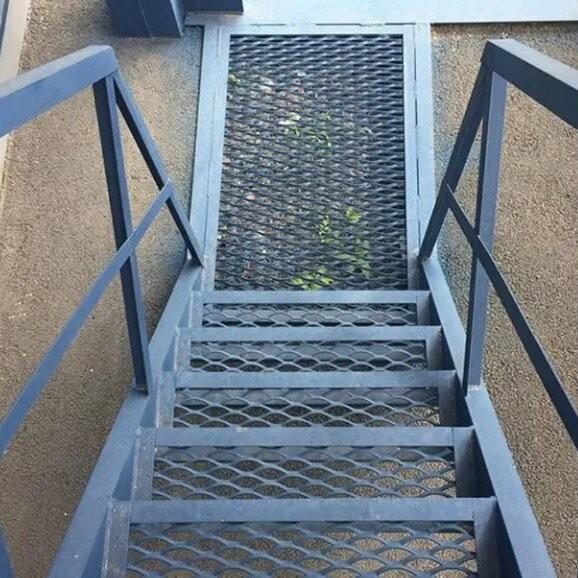
Anti-slip treads are usually bought as a line item on a stair package, which is how the return depth and the fixing detail end up being decided by whoever is welding that week. Those two numbers are exactly what makes a tread quiet underfoot or loose after a year.
Grip: raised, not flattened
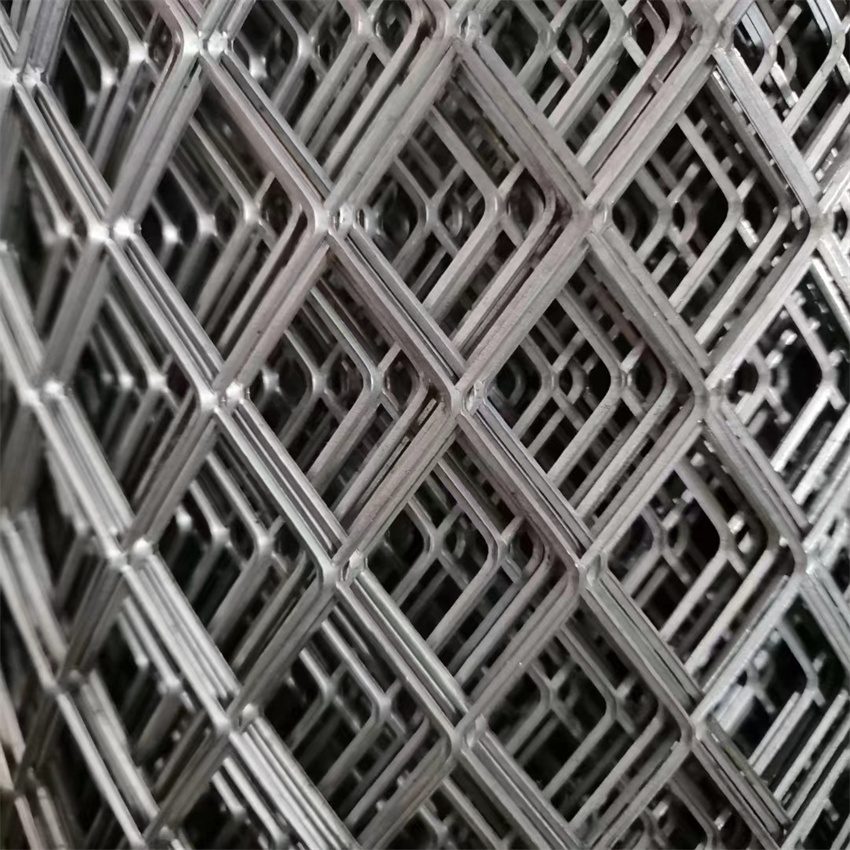
The slip resistance of an expanded tread comes from strands standing proud of the walking plane, plus the fact that water drains through instead of sitting on it. Flattened mesh removes both. If the specification calls for anti-slip and the drawing shows a flattened tread, the grip has to come from a grit coating — which wears out in the traffic lanes first.
Load: three numbers, not one
- Base thickness — 2.0 mm for light foot traffic at short spans, 3.0–5.0 mm for industrial access and trolley traffic.
- Return depth — a 25 mm return behaves very differently from a 40 mm one; depth does more for stiffness than an extra millimetre of sheet.
- Span between stringers — fixing centres set the span, and the span sets everything else.
Fixing: punched, not drilled
Holes punched in production at the drawing's centres cost nothing. Holes drilled on site are how treads end up sitting 3 mm high on one side, rocking underfoot. Send the stringer detail with the tread order and the holes arrive in the right place.
Coating and the front edge
Hot-dipping after fabrication covers the cut edges and the insides of the fixing holes — the places that rust first. On the leading edge, a pressed return survives boots and barrows better than a welded nose bar, and it is cheaper to make.